Leftover sourdough bread is never waste — it just moves on to its next job. After a day or two the crumb firms up and the crust goes soft, but the flavor is still there, and a good loaf keeps giving for the better part of a week. Here’s how we use up every last slice in our kitchen, from reviving a whole loaf in the oven to bread chips, breadcrumbs and a few proper recipes worth baking for.
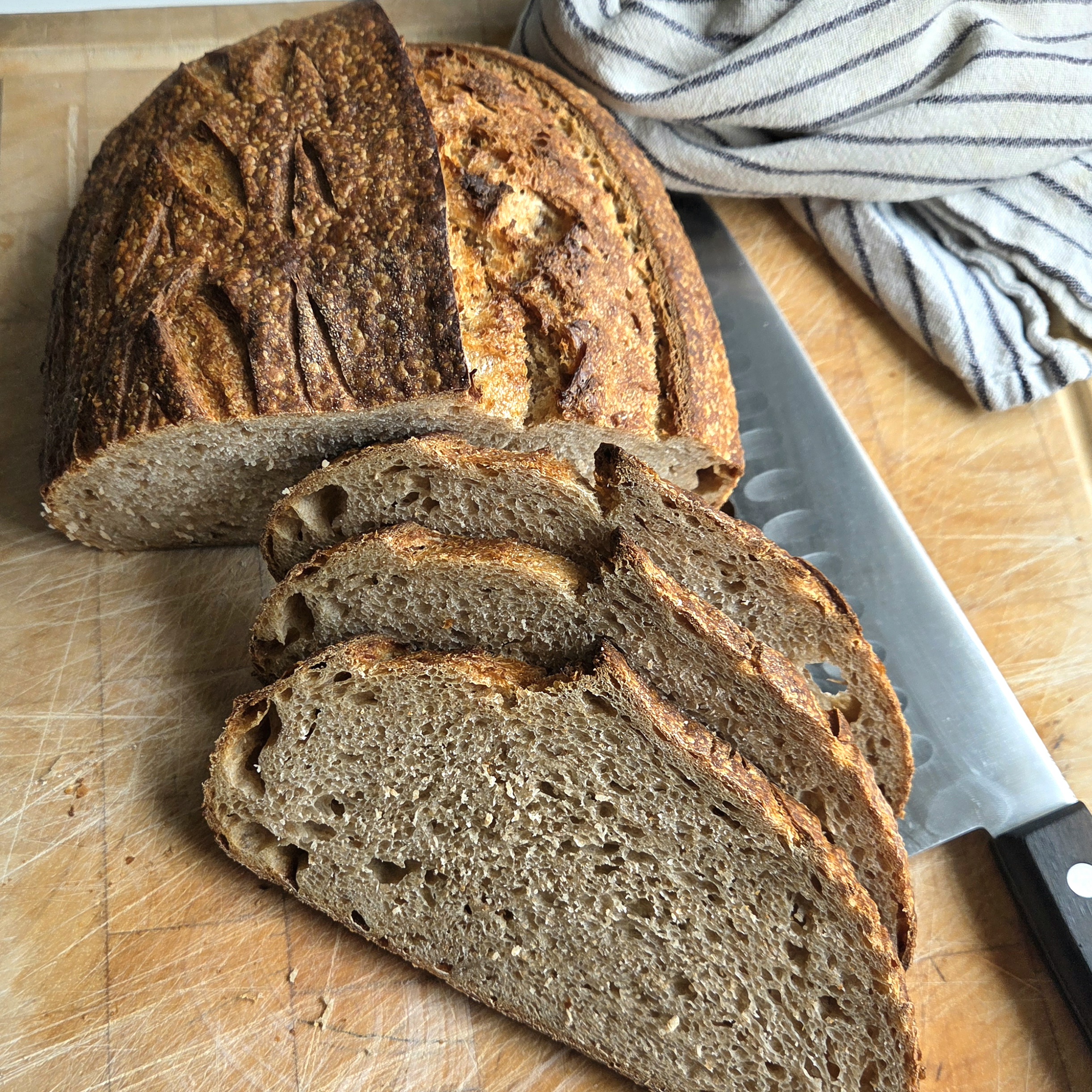
Why sourdough goes stale (and why that’s fixable)
Stale bread isn’t dry bread. As a loaf cools and sits, the starches that gelatinized during baking slowly recrystallize and squeeze out moisture — the crumb turns firm and the crust turns leathery. The water is mostly still in there, just in the wrong place.
That’s good news: heat reverses it. Warm the loaf back up past around 140°F (60°C) and the starches soften again, and the bread comes back close to fresh. Real sourdough handles this far better than commercial bread — the long fermentation and the acidity slow staling down, which is why a good loaf is still worth eating on day four.
The stale bread ladder
NNot all leftover bread is at the same stage, and matching the bread to the job is most of the skill:
- Day 1–2 — still soft. Sandwiches, toast, grilled cheese. No rescue needed.
- Day 2–3 — firm crumb, soft crust. Revive the whole loaf in the oven (below), or cut off the crust and grate it into panko. This is the sweet spot.
- Day 3–5 — properly firm. Bread chips, croutons, bread pudding, French toast. The bread needs to be sturdy enough to soak without collapsing.
- Day 5+ — hard and dry. Breadcrumbs. Dry it out completely and it keeps for months.
One rule that overrides all of it: if you see mold, the whole loaf goes. Bread is porous, and cutting around a spot doesn’t remove what’s grown through the crumb.
How to revive a stale sourdough loaf
This is the single most useful thing to know, and it takes about twenty minutes.
- Heat the oven to 400°F (200°C).
- Rinse the crust well under cold running water, all over. The crust should be properly wet — but don’t let the water soak into the crumb.
- Place the loaf in the oven and bake for 15–20 minutes, depending on the size of the loaf. A whole loaf goes straight onto a perforated baking tray or a rack, so the air circulates all the way around it. A half loaf goes cut side down on a tray, which protects the one surface that has no crust to hold it.
- The loaf is ready when the crust is crackly again and the bread smells like it just came out of the oven. Cool for five minutes before slicing.
Chef’s tip: this works once. The revived loaf is genuinely excellent for an hour or two, then it stales again faster than it did the first time — so revive the bread you’re about to eat, not the bread you’re saving. If you only need a few slices, toast them instead.
Turning sourdough into breadcrumbs
Dry breadcrumbs are the most useful thing in our kitchen and cost nothing.
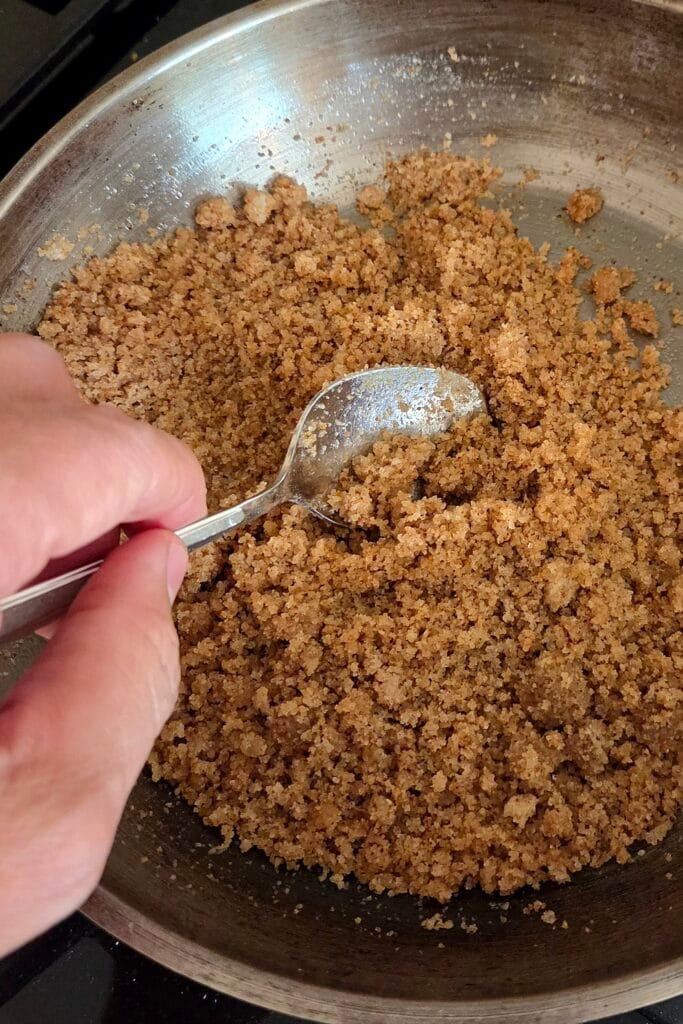
Cut the bread into rough cubes, spread them on a tray and dry them at 210°F (100°C) until completely dry with no give in the middle. Blitz them coarse or fine depending on what you want them for — a food processor works, but so does a small grinder cup on a stick blender. Cooled and stored airtight, they keep for months. The full method, including the snap test that tells you they’re dry enough, is in our sourdough breadcrumbs recipe.
For a lighter, flakier crumb that fries up crisper, grate the bread instead of blitzing it — that’s sourdough panko, and it’s worth its own method: see our sourdough panko guide.
Coarse dried crumbs fried in butter until golden are worth knowing about on their own — layered with stewed apples and whipped cream, they’re the base of tilslørte bondepiker, our Norwegian apple trifle. It’s a crisp topping worth reaching for anywhere you want texture.
Recipes for leftover sourdough
- Sourdough bread chips with sour cream, dill and roe — thin, crisp and salty, and the closest thing to a proper Scandinavian appetizer you can make from a stale loaf.
- Arme riddere — Norwegian French toast. Firm bread soaks better than fresh, so this is a recipe that genuinely wants leftovers.
- Chanterelle toast — a thick slice fried in butter under a pile of golden mushrooms. Two days old is exactly right: dry enough to crisp, sturdy enough to hold the topping.
- Sourdough bread pudding — half a loaf, cubed and soaked in vanilla custard, baked under a thick layer of blueberries. Uses more bread than anything else here.
- Sourdough-crusted salmon — a paper-thin slice fried onto the fish until it shatters like glass. It only gets easier as the loaf dries.
- Bread salad — toasted crisp, cooled, then dressed with the water the salted tomatoes release. The croutons stay crunchy right to the table.
- Sourdough panko — crustless bread, grated coarse. Lighter and crisper than anything in a box.
- Sourdough breadcrumbs — dried low and slow, then blitzed. The crust stays on, and that’s where the flavor is.
- Tilslørte bondepiker — the Norwegian apple trifle where the breadcrumbs aren’t a filler. Fried in butter with sugar and cinnamon, layered with apple compote and cream.
How to keep bread fresh in the first place
Most stale bread is a storage problem, not a baking problem:
- Cut side down on a board for the first day or two. Simplest method there is, and it keeps the crust crisp.
- A linen bread bag for day two onward — it lets the loaf breathe so the crust stays dry while the crumb keeps its moisture.
- Never the fridge. Refrigeration is the fastest way to stale bread; the starches recrystallize several times quicker at fridge temperature than at room temperature.
- Plastic softens the crust completely. Fine for sandwich bread, wrong for a crusty sourdough.
- Freeze what you won’t finish. Slice it first, freeze it the day it’s baked, and toast straight from frozen.
Leftover bread is not the same as sourdough discard
Worth being clear about, because the two get mixed up constantly. Discard is unfed starter — a wet, sour batter you remove when you feed your starter and stir into things like discard pancakes, discard naan and blueberry loaf cake. Leftovers are finished, baked bread. Different ingredient, different recipes, no overlap.
More sourdough guides
- Sourdough for Beginners — the full step-by-step guide, from starter to first loaf
- Beginner Sourdough Bread — the loaf to bake so you have leftovers in the first place